Feature · Part of The Best Daily Word Games
How Tiled Words Got Made (Mostly After Bedtime)
Paul Hebert built a digital game that feels like a physical one. Learn how Paul took an idea and built it into a daily favorite.
 By Craig Dugas · · 12 min read
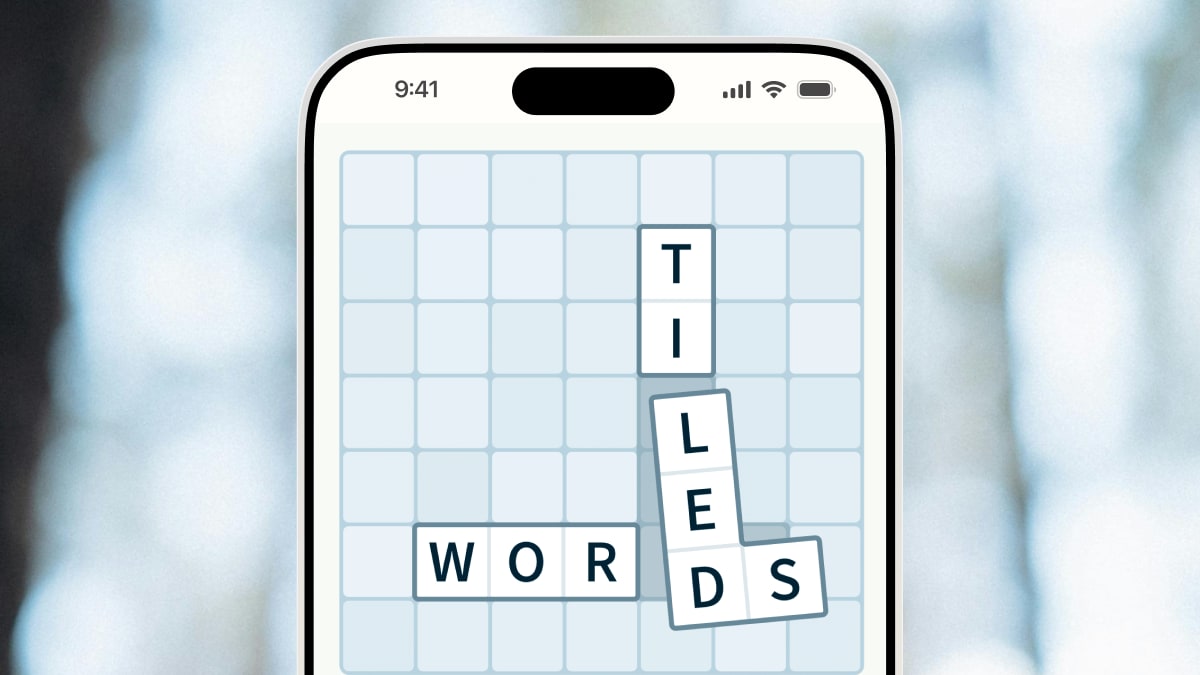
Most daily games come from someone trying to build a daily game. Tiled Words came from a hike.
Paul Hebert wasn’t trying to make a word game. He’d been tinkering with a tile-arrangement project for a while, inspired by board games like Patchwork and Cartographers, where you fit Tetris-like pieces onto a grid. The digital version wasn’t quite clicking. He paused it before his honeymoon and didn’t pick it back up for a year. Then, when out hiking, he had the small thought that changed everything: what if the tiles had letters on them?
What grew out of that hike launched at the 2025 Portland Retro Gaming Expo: a daily puzzle where you rearrange crossword clues that have been broken into shapes, fitting them back together against the clock. That’s Tiled Words. Paul designs and codes it. His wife Lisa shapes the puzzles with him on walks with their dog and after their baby goes to sleep. They’ve shipped a new one every single day for over six months. More than 200 puzzles in, we asked Paul how the project actually runs.
Web developer and creator of Tiled Words. Combines elegant frontend design with creative coding to build daily puzzles that look as good as they play.

In conversation with Paul
I didn’t actually set out to build a word game.
Forbes called Tiled Words a Crossword-Boggle-Tetris hybrid, which is a phrase that shouldn’t really work but does. How did the mechanic come together. Was there a specific lightbulb moment, or did it emerge from iterating on something else?
I didn’t actually set out to build a word game.
I was originally inspired by board games like Patchwork, My City, and Cartographers. In all of these games you arrange Tetris-style tiles on a grid to achieve different goals. I wanted to take that game mechanic and give it a digital spin. I tried combining different concepts but none of them felt right. I was having fun coding but the games themselves weren’t fun to play. When my wife and I went on our honeymoon I paused the project and didn’t pick it back up.
One year later, I was zoning out on a hike thinking about the project again. An idea popped into my head: what if I put letters on the tiles? Then I started thinking about clues and crosswords. By the end of the hike I had the core concepts behind Tiled Words planned out.
Your Work page is a beautiful mix of finished things and fun experiments. Spaced, Jumbled, Squiggles and Dots, the Imaginary Clock Museum. What was different about Tiled Words in the early days that made you keep going on it when others got set down?
Thanks! I dabble and tinker a lot and have made several half-baked game projects over the years. Most of them don’t go anywhere.
One thing that helped with Tiled Words was that the core concept was simple, but also felt like a complete game. I challenged myself to build a prototype of that idea without adding any extra bells and whistles. I shared a demo online along with a questionnaire and got some really positive feedback. Dozens of people filled out the questionnaire and almost all of them liked the game and wanted to play more! That initial feedback kept me motivated to launch Tiled Words.
The Imaginary Clock Museum. I have to ask. Where does that one come from?
Haha, yeah… that’s a weird one. I was applying for a web developer job and they gave me a take-home assignment to code a clock as a web page. I got a little carried away and ended up building The Imaginary Clock Museum. The job didn’t end up being a good fit (they wanted a workaholic and I wanted work-life balance) but I enjoyed the project and wanted to share it.
She told me my clues were boring!
Tiled Words is genuinely a family project. Lisa brainstorms themes with you on dog walks, you build puzzles after the baby’s asleep. What’s the actual division of labor look like, and how has it evolved over 200+ puzzles?
It’s been really fun working with Lisa on Tiled Words! Early on she had great feedback on how the game should work: she suggested the “tap to rotate” control as well as merging tiles when you complete a word.
She’s also responsible for the quality of the puzzles. I was initially making all the puzzles myself but when she play-tested them she told me my clues were boring!
She suggested that wherever possible the selected words should have a double meaning: they should be connected to the theme with one meaning and connected to the clue with another. For example, if the theme is “Types of Beans” and the word is “Navy” then the clue should reference a sea-faring military force, not just describe a navy bean.
After that feedback I tossed out my old puzzles and we started making them together. I do all of the coding and design but the puzzles are a collaboration between the two of us.
Were there moments early on where the workload felt unsustainable, or did the daily rhythm settle in faster than you expected?
It still feels unsustainable sometimes to be honest. Making a daily puzzle with hand-crafted clues is a lot of work, especially on top of our day jobs and caring for a baby. We’ve figured out a pretty good rhythm and try to stay a few days ahead but there are still stressful times where we’re scrambling to get a puzzle done for the next day after putting the baby to sleep.
The mechanic of tiles binding together when correctly placed (your “magnetic” effect) is such a satisfying small touch. Are there other little moments of friction or polish in the game that you’re particularly proud of, that maybe most players don’t consciously notice?
Oh man, I could geek out about this kind of stuff all day. I had a ton of fun adding these little details to the game.
Where do I start? I really like how the bullet points in the clue list turn into check marks, the subtle color differences in the grid cells, and the little “bounce” to the rotation animation. I also enjoy how the letters shake if you put a word together the wrong way and the animated border on the victory screen. I like the streak animation as well but want to revamp it so it works better with longer streaks.
It’s a really special opportunity to be able to become part of someone’s routine like that and give them a little bit of joy every day.
You’ve published some genuinely moving details about how people play Tiled Words: the player whose mom is recovering from a stroke, the dad bouncing his baby to sleep, the people playing around fire pits. Has any one of those stuck with you more than the others?
It always means a lot to me hearing from people who play the game, especially when they talk about sharing it with others.
One that struck me recently was a player sharing their 200 day streak. They’ve played every day since it launched! It’s a really special opportunity to be able to become part of someone’s routine like that and give them a little bit of joy every day.
You’re building toward player-submitted puzzles and sharing your puzzle-builder tool. What’s the ambition there, is Tiled Words becoming more of a platform than a game?
I’m super excited about this! Depending when you share this Q & A it might already be launched.
There’s a really vibrant and creative community around Tiled Words. I enjoy making the puzzles and I want to give others that opportunity as well. I’m excited to see what they make.
Plus, it means that I get to play! When people submit puzzles I give them a test run before uploading them. People are helping me test the tools and this week I played my first puzzle that I didn’t make myself!
If someone plays Tiled Words for the first time today, what’s the moment you hope they have, the moment that makes them come back tomorrow?
When we make the puzzles we’re always aiming for “Aha” moments. We want you to feel like you solved a riddle or found an unexpected connection between the theme, words, and clues.
Hopefully it makes you think, gives you a chuckle, and brings a little joy to your day.
When categorized in a simple way, Tiled Words is a daily word puzzle. In practice, it’s the clues, the rotation animations, that magnetic “snap” that you can feel. It’s those small considerations plus the predictably enjoyable gameplay that’s refreshed every day that turn Tiled Words into a game worth coming back to.
If you’ve got five minutes today, give Tiled Words a play. And watch for the small stuff.